

The night before our team away day at Substation, I genuinely considered cancelling.
Impact Brixton had just been through one of the most difficult summers in our history.
We had lost three of our largest customers and, with them, close to 30% of our revenue.
The reasons were understandable. As companies grow, their needs change. They want things like lifts, bike storage, larger facilities and the sort of infrastructure that bigger coworking operators can provide.
We couldn’t.
Impact Brixton has five private offices. We don’t have a lift. We don’t have a bike shed. There are physical constraints to what our building can ever become.
And when your revenue has just fallen by almost half, those constraints feel considerably less philosophical.
So you can probably understand why, the night before an 8am team away day, I was thinking:
Why am I going to spend half a day climbing walls when my business is close to failing?
I had emails to answer. Decisions to make. Problems everywhere.
Climbing felt very low down the list.
Thankfully, our General Manager Rachael wasn’t having it.
She reminded me that I’m constantly talking about the importance of us spending proper time together as a team.
Essentially: Gerald, we’re going.
She was right.
And I’m incredibly glad she was.
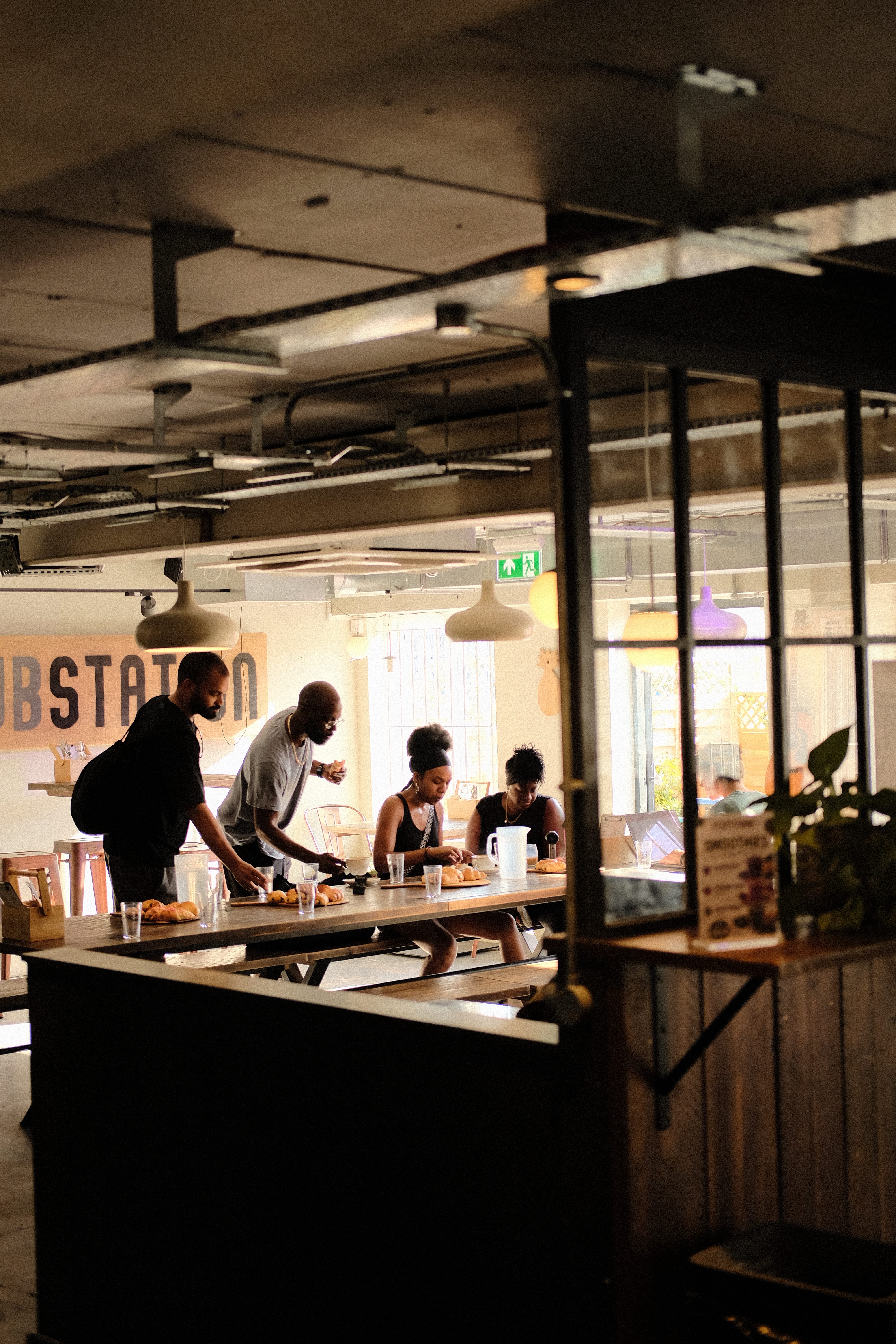
It started with croissants
We had originally been introduced to Leila at Substation through a friend and member, Zac Munroe, an Impact Brixton client and architect who had experienced it himself and couldn’t recommend it highly enough.
Leila and I started talking about how two Brixton businesses could work together.
Impact Brixton has its rum-tasting experience. Substation has its corporate climbing and strategy experiences.
Why not swap?
More importantly, why not find ways for the communities around our businesses to know one another?
Substation generously invited our team to experience one of its corporate mornings.
Eight of us arrived at 8am.
Some enthusiastic.
Some sceptical.
Me, perhaps the most distracted of everyone.
The first thing I remember is breakfast.
Croissants, pains au chocolat, coffee. It felt somewhere between a French boulangerie, a buzzing café and a gym.
But there was something else I noticed almost immediately.
People knew each other.
People talked.
It didn’t feel like a room full of anonymous gym memberships. It felt like a community that happened to have climbing walls in it.
I put my laptop down on a table.
Someone essentially told me it was perfectly safe there.
That tiny interaction told me something about the place.
There was trust.
You could feel that whoever had built Substation cared about more than getting people through the door.
Of course, I then ruined the zen by repeatedly going back to my laptop.
Emails.
Messages.
Problems.
Business.
Leila noticed.
She didn’t tell me off. She smiled.
She acknowledged that there was obviously a lot going on in my head and said something that I didn’t fully believe at the time:
Once you start climbing, you’re going to become incredibly present.
You won’t be thinking about the emails.
She was absolutely right.
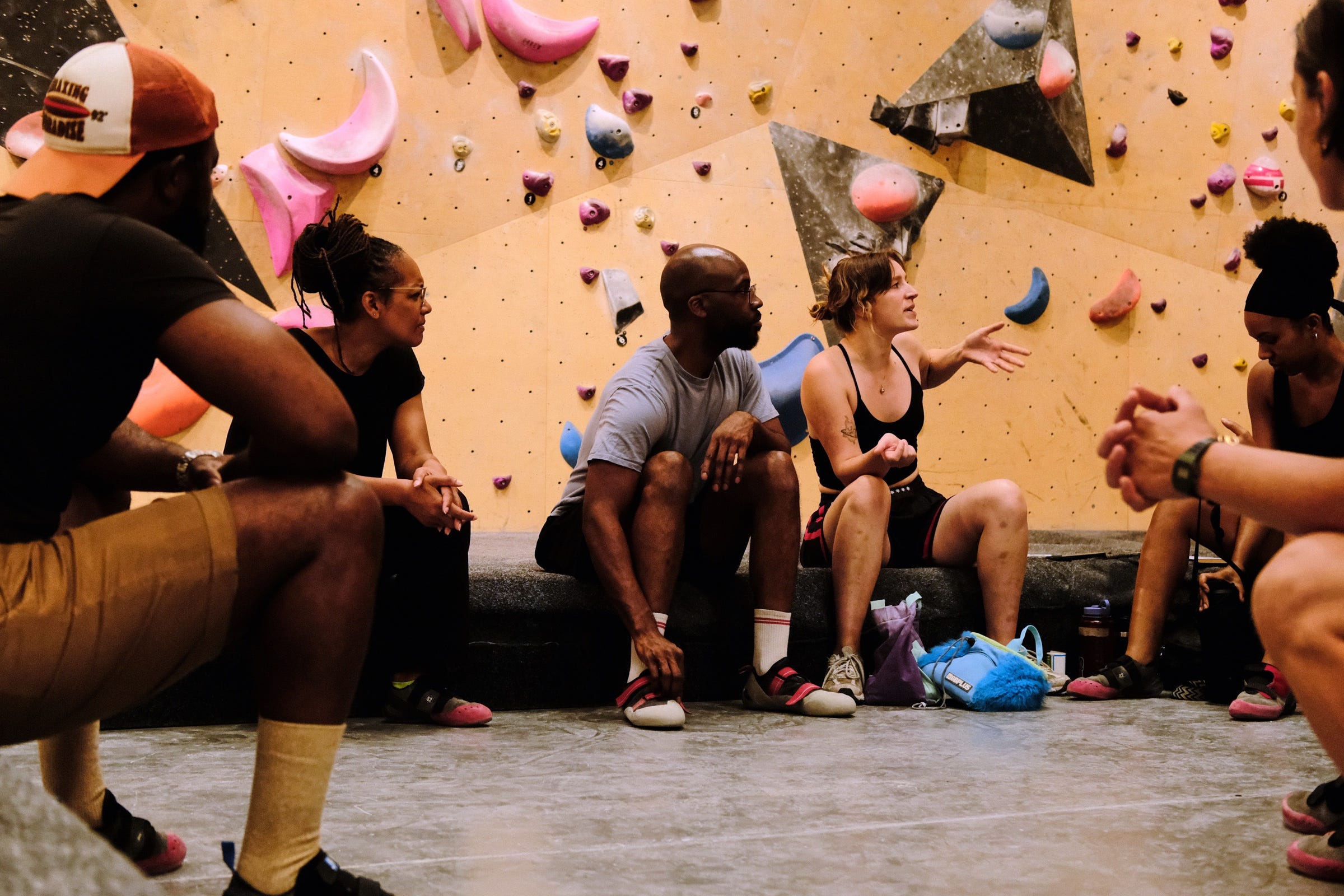
Then we started climbing
I had never bouldered before.
And I had massively underestimated it.
Looking at somebody else climb, there is a temptation to think:
How difficult can this actually be?
Quite difficult, as it turns out.
We were split into two groups of four and taken through the fundamentals by the Substation team.
The first revelation was that climbing isn’t simply about strength.
It’s a problem.
Where does your foot go?
Where should your weight be?
Which hand should move next?
Can you reach that hold?
Should you even be trying to reach it from that position?
The stronger person isn’t necessarily the better climber.
Technique matters.
Balance matters.
Planning matters.
And attention really matters.
We got through some of the easier routes. Then we started meeting problems that weren’t so easy.
We failed.
We tried again.
We failed differently.
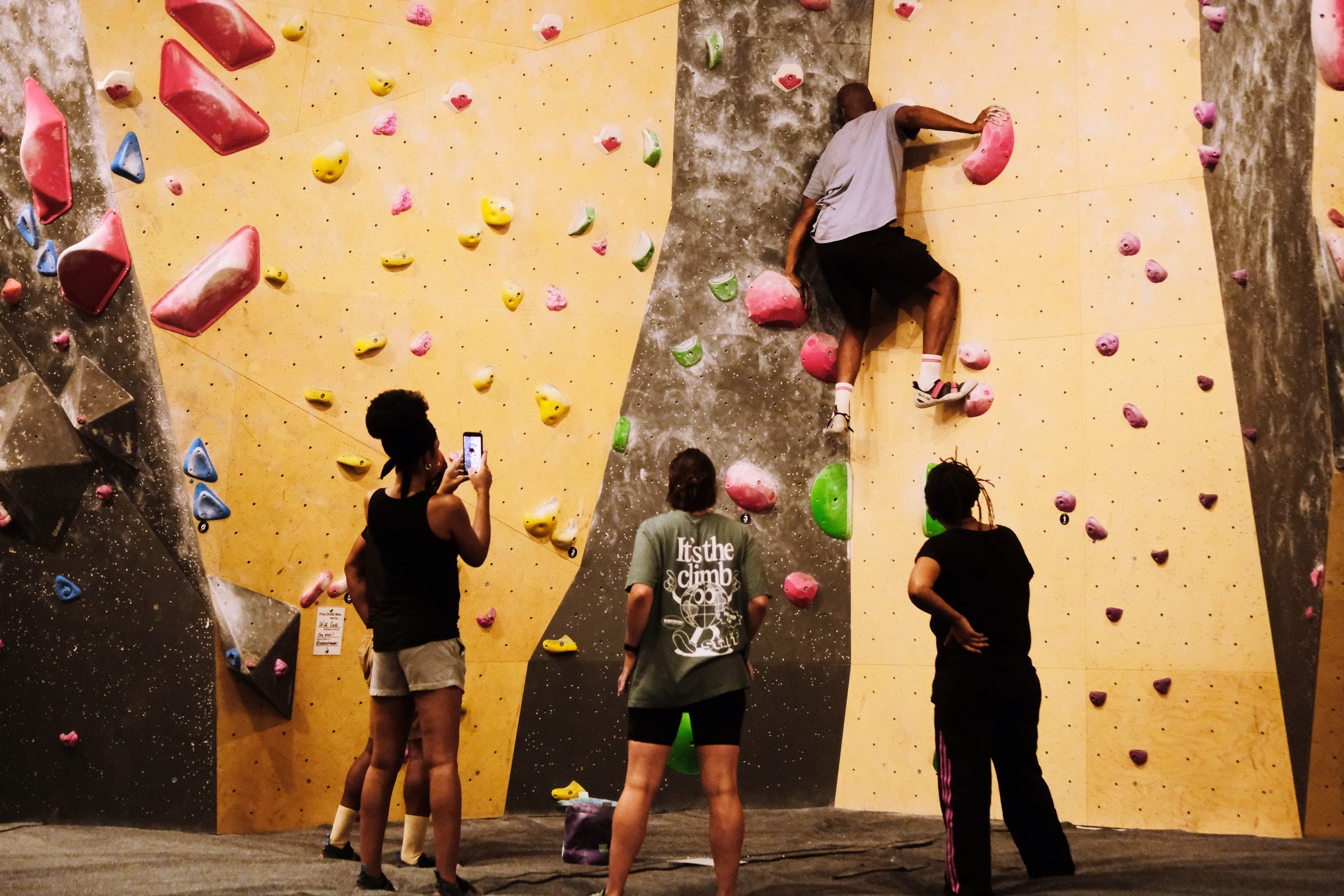
Someone on the floor would spot something you couldn’t see from the wall.
“Move your foot there.”
“Try that hold.”
“No, the other one.”
And slowly eight colleagues who had arrived at an early-morning corporate away day started laughing, shouting instructions at one another and trying to solve these strange physical puzzles together.
Daniel surprised all of us. He absolutely took to it.
Kylie had started the morning by joking that the team seemed to be full of injuries. She has problems with her shoulder. Others had their own aches and limitations.
Yet once we were engrossed in climbing, something interesting happened.
People stopped defining themselves by what they couldn’t do and started concentrating on the next move they could make.
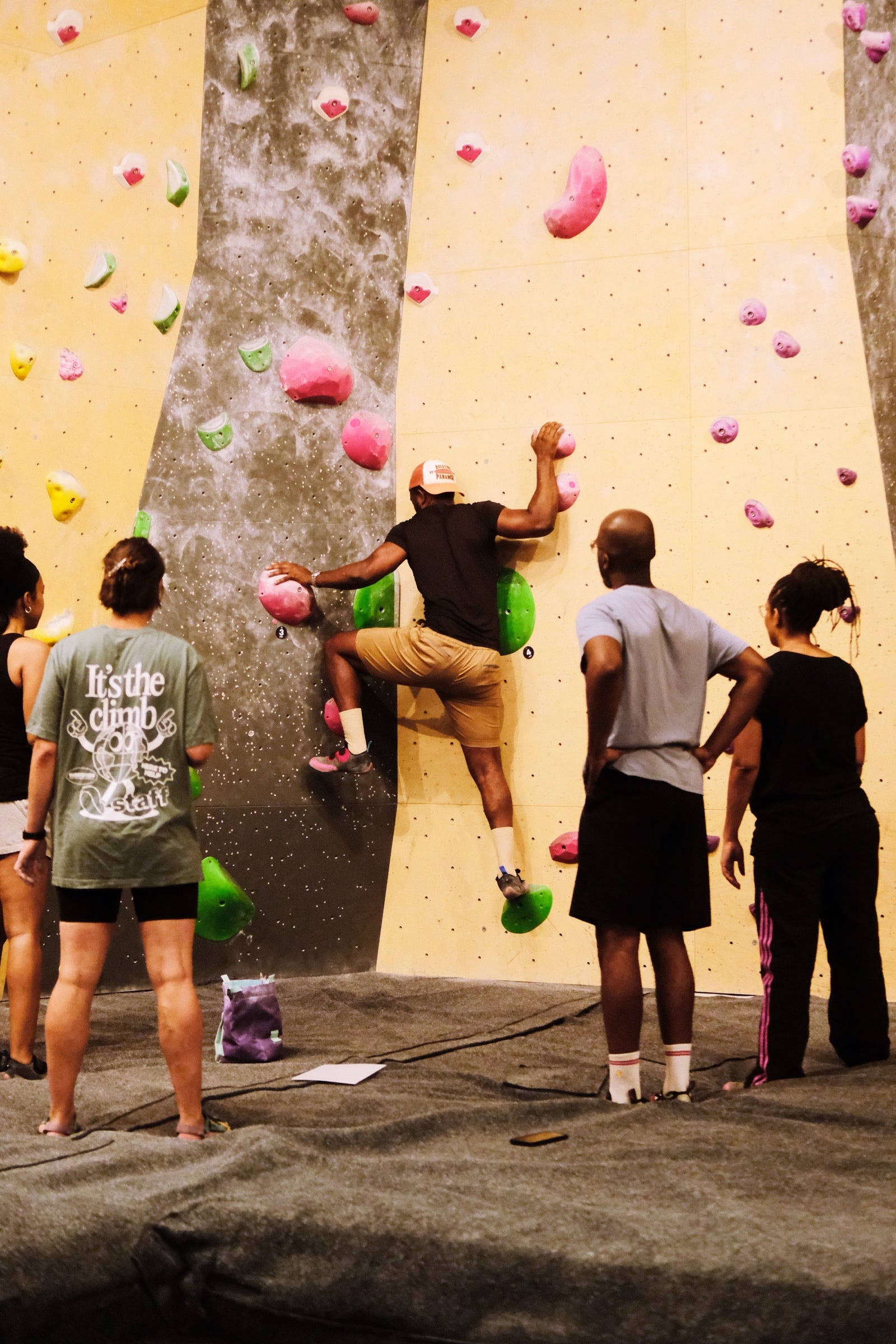
You can’t worry about Tuesday while you’re hanging from a wall
This was the big revelation for me.
Leila had been watching me return to that laptop all morning.
Then I started climbing.
And I didn’t touch my laptop or phone for the next two hours.
Not because somebody had confiscated them.
I forgot about them.
For somebody whose brain is nearly always running across multiple problems, businesses, emails, decisions and ideas, that is incredibly unusual.
Bouldering demands your attention.
Not most of it.
All of it.
When you’re on that wall trying to work out where your left foot goes while your fingers are telling you they would quite like you to make a decision soon, there isn’t much cognitive capacity left for an email somebody sent you yesterday.
You cannot worry about Tuesday while you’re hanging from a wall.
The consequence of losing focus is immediate.
That changes everything.
We talk a lot about “being present”.
We meditate.
We put our phones away.
We install focus apps.
We go on retreats.
We tell ourselves to concentrate harder.
Bouldering gave me a completely different experience of presence.
It didn’t ask me to ignore everything else.
For those moments, everything else simply ceased to exist.
And I think this is where the experience became much more interesting than team building.
Because perhaps one of the reasons so many corporate strategy sessions are terrible isn’t that people lack ideas.
Maybe we’re asking people to think deeply while their minds are still somewhere else.
First movement. Then stillness.
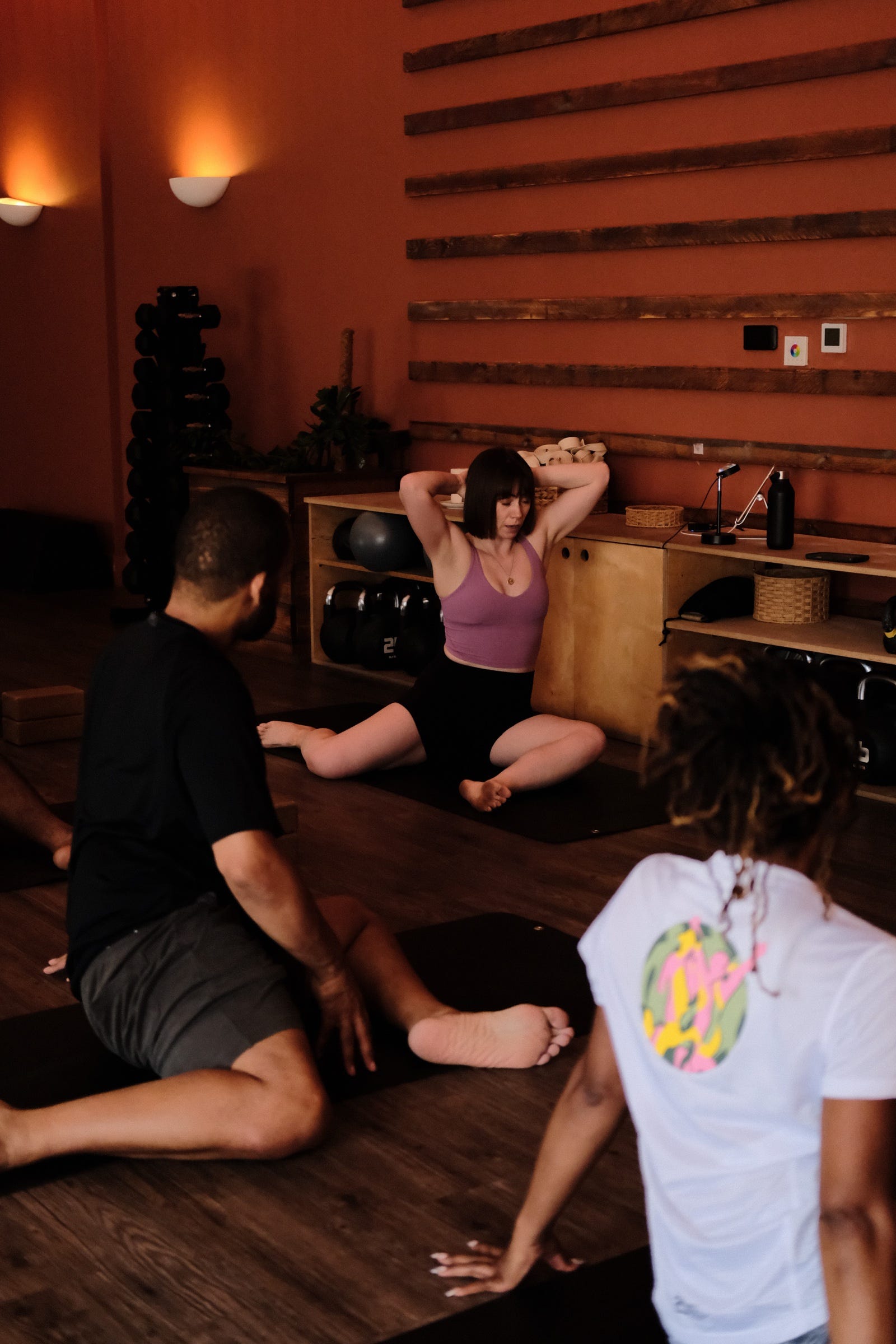
After climbing, we went into yoga.
The contrast was wonderful.
We had gone from hanging from walls, falling onto mats and shouting instructions at one another to slowing everything down.
None of us were particularly accomplished yogis.
It didn’t matter.
The climbing had made us present.
The yoga centred that energy.
By the time we came together afterwards to talk about Impact Brixton, something had changed.
No phones.
No laptops.
No usual distractions.
And, perhaps more importantly, the normal dynamics of the workplace seemed to have shifted as well.
We had spent the morning looking slightly ridiculous together.
Failing together.
Learning together.
Being beginners together.
I was no longer the CEO with all the answers.
I was just another person trying to work out how the hell to get up a wall.
That vulnerability matters more than I realised.
Then we had one of our best strategy conversations in years
The question facing Impact Brixton was serious.
What do we do now?
Losing nearly half your revenue naturally makes you focus on what you’re missing.
We don’t have enough private offices.
We don’t have a lift.
We don’t have bike storage.
We cannot provide every facility that a growing company might eventually require.
The instinct is to view all of those things as disadvantages.
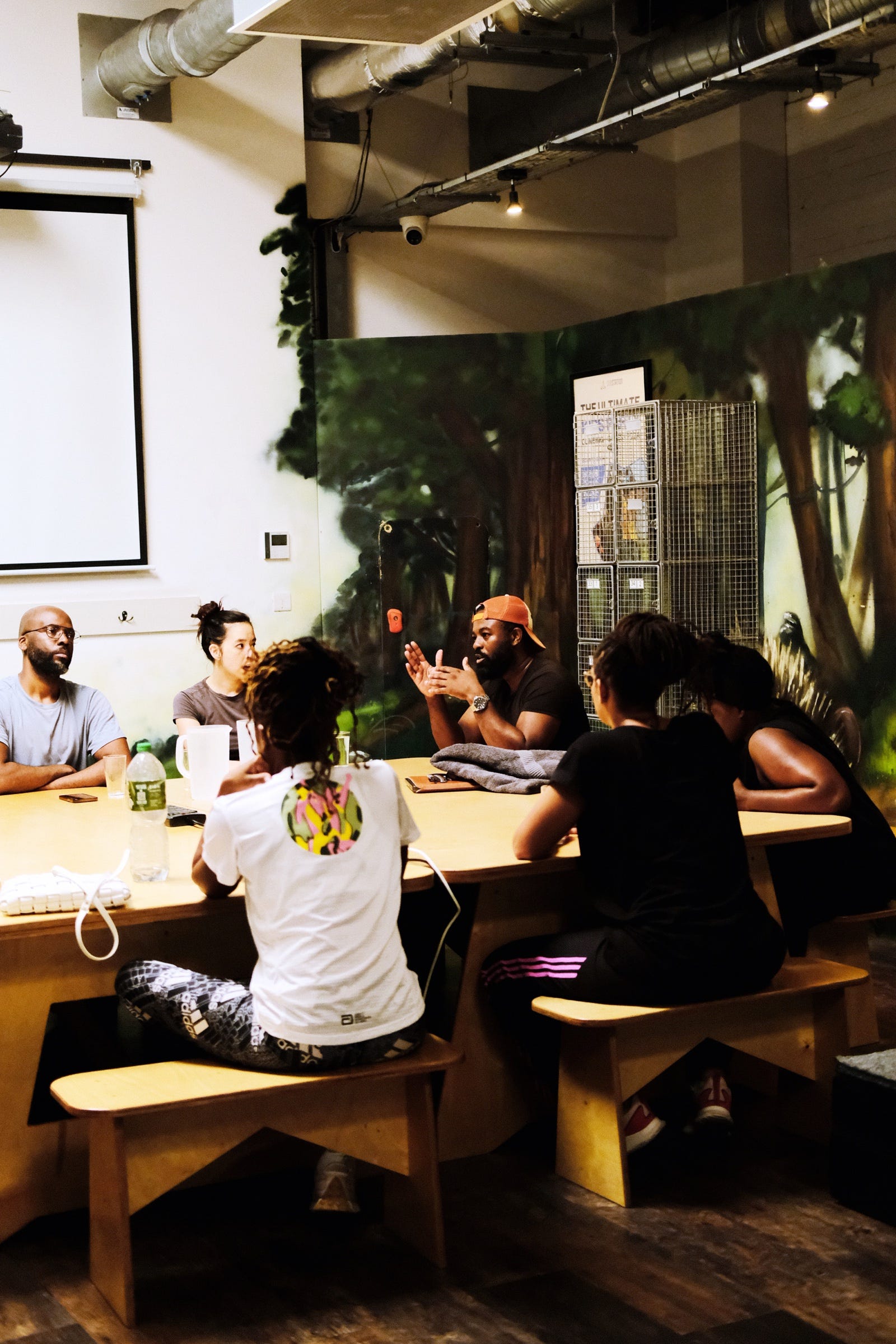
But sitting together after that morning at Substation, we started looking at the problem differently.
What if the constraint wasn’t something to fight?
What if it was telling us what Impact Brixton should actually become?
We realised that we’d been trying to be too many things to too many people.
Perhaps we shouldn’t be trying to compete for larger companies that eventually need the infrastructure of a WeWork-sized building.
Perhaps our job is to be brilliant for the people who need us most:
Freelancers.
People starting businesses.
Small teams.
People registering their first company.
Entrepreneurs who need community before they need a corporate headquarters.
Our five private offices suddenly weren’t evidence that we needed more private offices.
They were evidence that perhaps private offices shouldn’t define our future at all.
That was a fairly profound shift.
Instead of asking:
How do we overcome our constraints?
we started asking:
What are our constraints trying to tell us?
The quietest voices got louder
Something else happened around that table.
People who don’t always speak the most in our strategy meetings started contributing much more.
Cooper was one of them.
She helped push the conversation beyond the physical boundaries of Impact Brixton itself.
If our mission is to help people build businesses, why should every solution depend on someone physically occupying a desk?
That opened up a much bigger conversation around virtual office services and what it might mean to support a business from the very first day it exists — potentially creating ways for people to establish and connect their companies to Impact Brixton without requiring another square foot of office space.
That thinking is still evolving.
But that’s precisely the point.
The constraints of the building stopped limiting our imagination about the business.
And watching Cooper contribute so strongly also made me notice something else.
Changing the environment had changed who felt able to speak.
The normal hierarchy had softened.
People were relaxed.
Optimistic.
Open.
Energised.
And I found myself listening differently too.
We had spent a morning helping one another do something none of us were particularly good at.
By the time we talked strategy, contribution wasn’t determined by job title.
It was simply about whether someone could see the next move.
Which, thinking about it now, is exactly what we’d been doing on the climbing wall.
We walked in worrying about the business. We left redesigning it.
I don’t want to overstate what can happen during one team away day.
Impact Brixton’s challenges didn’t disappear because we went bouldering.
The revenue didn’t magically reappear while I was doing yoga.
There is still difficult work ahead.
But something genuinely significant did happen.
We stopped seeing our limitations purely as failures.
We started seeing them as information.
And that is already changing how I think about the next version of Impact Brixton.
The team that walked into Substation was asking:
How do we replace what we’ve lost?
The team that walked out was starting to ask:
What if we build around what we’re uniquely good at instead?
Those are very different questions.
And strategy is often nothing more—and nothing less—than finding the better question.
Maybe we’re doing corporate away days wrong
The experience also made me question what we normally call “team bonding”.
We default to drinks.
Dinner.
The pub.
Christmas parties.
Perhaps an activity followed by alcohol.
There’s nothing inherently wrong with any of that.
But I now think we’re overlooking something much more powerful:
state.
If you want people to connect differently, change their state.
If you want them to think differently, don’t necessarily give them another brainstorming framework.
Change their environment.
Make them move.
Make them learn something.
Make them slightly vulnerable.
Let them fail at something completely unrelated to work.
Make the CEO a beginner again.
Get everyone off their phones.
Bring them completely into the present.
Then ask the difficult question.
Substation describes its corporate retreats as moving teams through physical challenge, stillness and conversation. Its strategy experiences combine climbing with activities such as yoga before teams move into dedicated time to think, plan and align. That sounds like marketing copy until you experience why the sequence works.
I experienced it.
It works.
And maybe Brixton businesses can do more of this too
There’s another reason I’m grateful to Leila and the Substation team.
This started because somebody in our community made an introduction.
One Brixton business introduced another.
We exchanged experiences.
Now we’re talking about what a deeper partnership could look like.
That’s how I want more of Brixton to operate.
Not simply as hundreds of businesses occupying neighbouring postcodes.
As an ecosystem.
Impact Brixton has a community.
Substation has a community.
Other businesses around us have theirs.
Imagine what becomes possible when those communities start crossing over, collaborating and genuinely recommending one another.
That’s something I want to explore much more through Impact Brixton and Brixton Culture Capital.
Local economic development doesn’t always require another grand programme.
Sometimes it begins with:
You should meet Leila. I think you’ll like what they’re building.
Someone did that for me.
I’m glad they did.
So, would I recommend it?
Completely.
If you have a team of five, ten, twenty or more and you’re facing a problem that genuinely matters, I’d particularly consider something like this.
Not because climbing will magically solve your strategy.
Because the quality of strategy isn’t determined by how many hours you spend in a meeting room.
It’s determined by the quality of insight you can reach together.
And sometimes the fastest route to that insight is to stop talking about the problem for a while.
Go somewhere unfamiliar.
Move your body.
Become a beginner.
Laugh at yourselves.
Put the laptops away.
Then come back to the question.
Substation currently offers corporate retreat formats ranging from movement-focused sessions to half-day and full-day strategy experiences, combining climbing, mindful movement and dedicated time for teams to work through what matters to them.
We only did part of what is possible.
Next time, I’d love to do the full strategy experience.
And there will definitely be a next time.
I arrived at Substation sceptical.
I nearly cancelled.
The following morning my hands were sore, my forearms were tingling and it felt like I’d done a better workout than almost anything I’d experienced in a gym.
More importantly, my team had helped me see my business differently.
We haven’t been back yet.
But we’re planning to.
And I think I may have found a new hobby in the process.
So thank you to Leila and everyone at Substation for looking after us.
Thank you to Rachael for making sure I didn’t cancel.
And thank you to my team for showing up, climbing, falling, stretching, thinking and speaking.
It turns out our best strategy meeting in years started when we stopped having a meeting.
And got on a wall instead.